

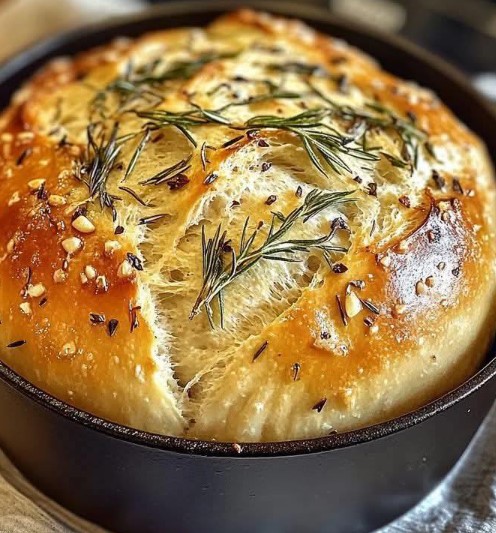
Rustic No Knead Rosemary Garlic Bread is everything home baking should be: simple, aromatic, deeply satisfying, and rooted in tradition. With a crisp golden crust, a soft and airy interior, and the irresistible fragrance of fresh rosemary and garlic, this bread delivers bakery-quality results with minimal effort. No kneading, no complicated techniques, and no special equipment required. This is the kind of bread that fills your kitchen with warmth, invites everyone to the table, and proves that great bread doesn’t have to be difficult.
Why No Knead Bread Became So Popular
No knead bread revolutionized home baking by removing the most intimidating step: kneading. Instead of manual labor, this method relies on time and hydration to develop gluten naturally. The result is bread with excellent structure, open crumb, and deep flavor, achieved with almost no hands-on work.
Rustic no knead bread is especially appealing because it fits modern lifestyles. You can mix the dough in minutes, let it rest while you go about your day, and bake when ready. It’s forgiving, flexible, and ideal for both beginners and experienced bakers.
The Rustic Appeal of Rosemary Garlic Bread
Rustic bread is meant to look homemade. Its uneven shape, cracked crust, and flour-dusted surface are part of its charm. Adding rosemary and garlic enhances this rustic character, infusing the loaf with earthy, savory notes that feel timeless and comforting.
Rosemary brings a piney, aromatic freshness, while garlic adds warmth and depth. Together, they elevate a simple loaf into something memorable without overpowering the natural flavor of the bread.
Ingredients You’ll Need
Simple Ingredients with Big Impact
All-purpose flour or bread flour
Warm water
Active dry yeast or instant yeast
Salt
Fresh or dried rosemary
Garlic
Olive oil
These basic ingredients work together to create a loaf that is crusty on the outside, soft on the inside, and rich in flavor. The olive oil adds subtle richness, rosemary provides fragrance, and garlic brings savory balance.
Choosing the Right Flour
All-purpose flour works perfectly for no knead bread and produces a tender crumb with a crisp crust. Bread flour can also be used for a slightly chewier texture. The key is using flour that absorbs water well, as high hydration is essential for no knead success.
Measuring accurately helps maintain the dough’s balance, ensuring it remains sticky enough to develop structure without kneading.
The Role of Time in No Knead Bread
Time is the secret ingredient in no knead bread. During the long resting period, yeast slowly ferments the dough, developing flavor and gluten structure naturally. This slow fermentation creates depth that quick-rise breads can’t match.
The longer the dough rests, the more complex the flavor becomes. Even an overnight rise can dramatically improve taste and texture.
Why Rosemary and Garlic Work So Well in Bread
Rosemary is one of the few herbs that retains its flavor during long fermentation and baking. Its oils infuse the dough, creating aroma throughout the loaf rather than just on the surface.
Garlic complements rosemary by adding warmth and savory richness. When baked, garlic mellows, becoming slightly sweet and deeply aromatic, perfectly balanced against the crisp crust and soft crumb.
Step-by-Step Overview of the No Knead Process
Mixing the Dough
All ingredients are mixed together in one bowl until a shaggy, sticky dough forms. There’s no need to knead or overmix.
First Rise
The dough rests covered at room temperature for several hours or overnight. During this time, fermentation and gluten development occur naturally.
Shaping the Loaf
After rising, the dough is gently shaped into a round loaf. Minimal handling preserves air bubbles for a lighter crumb.
Final Rest
The shaped dough rests briefly while the oven heats, allowing it to relax and rise slightly more.
Baking
The bread is baked until deeply golden, producing a crisp crust and soft interior.
Texture and Flavor Profile
Rustic No Knead Rosemary Garlic Bread has a crackly crust that shatters slightly when sliced, revealing an airy interior with irregular holes. The crumb is tender yet structured, perfect for soaking up olive oil, butter, or soup.
The flavor is savory, aromatic, and balanced. Rosemary and garlic are present in every bite without overwhelming the natural wheat flavor of the bread.
Tips for Perfect No Knead Bread
Use fresh yeast for reliable rise. Don’t rush the resting time, as patience improves flavor and texture. Keep the dough sticky, as dry dough leads to dense bread. Let the loaf cool before slicing to allow the crumb to set properly.
Common Mistakes to Avoid
Adding too much flour can make the bread heavy. Overhandling the dough removes air and reduces oven spring. Underbaking results in a pale crust and gummy interior. Skipping the cooling step can cause the bread to collapse slightly when cut.
Variations to Try
Olive and Rosemary Bread
Add chopped olives for a briny contrast to the herbs.
Garlic Parmesan Version
Sprinkle grated parmesan into the dough for added richness.
Whole Wheat Rustic Bread
Replace part of the flour with whole wheat flour for a heartier loaf.
Extra Crispy Crust
Bake the bread with steam or in a covered vessel to enhance crust development.
How to Serve Rosemary Garlic Bread
This bread is incredibly versatile. Serve it warm with butter, olive oil, or balsamic vinegar. Pair it with soups, stews, or pasta dishes. Use it for sandwiches, bruschetta, or simply enjoy it toasted.
It also makes an excellent side for holiday meals, dinner parties, or casual family dinners.
Storage and Shelf Life
Store the bread at room temperature wrapped loosely in a cloth for up to two days. Avoid airtight containers, which soften the crust. For longer storage, freeze sliced bread and reheat as needed.
To refresh day-old bread, warm it briefly in the oven to restore crustiness.
Why This Bread Is Perfect for Beginners
Rustic No Knead Rosemary Garlic Bread is ideal for new bakers because it removes pressure and precision. There’s no kneading to master, no shaping perfection required, and no strict timing. The process is forgiving, and the results are consistently impressive.
Even first-time bread makers can achieve a loaf that looks and tastes like it came from an artisan bakery.
Frequently Asked Questions
Can I Use Dried Rosemary?
Yes, dried rosemary works well, though fresh offers stronger aroma.
Does the Dough Need Refrigeration?
Room temperature fermentation works perfectly, but refrigeration can be used for longer fermentation.
Can I Make This Vegan?
Yes, the recipe is naturally vegan when made with olive oil.
Final Thoughts
Rustic No Knead Rosemary Garlic Bread is a celebration of simple ingredients, patience, and tradition. With its crisp crust, soft interior, and fragrant herbal aroma, it delivers everything people love about homemade bread without the stress of complicated techniques. Whether you’re baking for your family, guests, or yourself, this loaf brings warmth, comfort, and timeless flavor to the table. Once you try it, you’ll understand why no knead bread has become a beloved staple in kitchens around the world.